
Some things in a story are invented. This one was not.
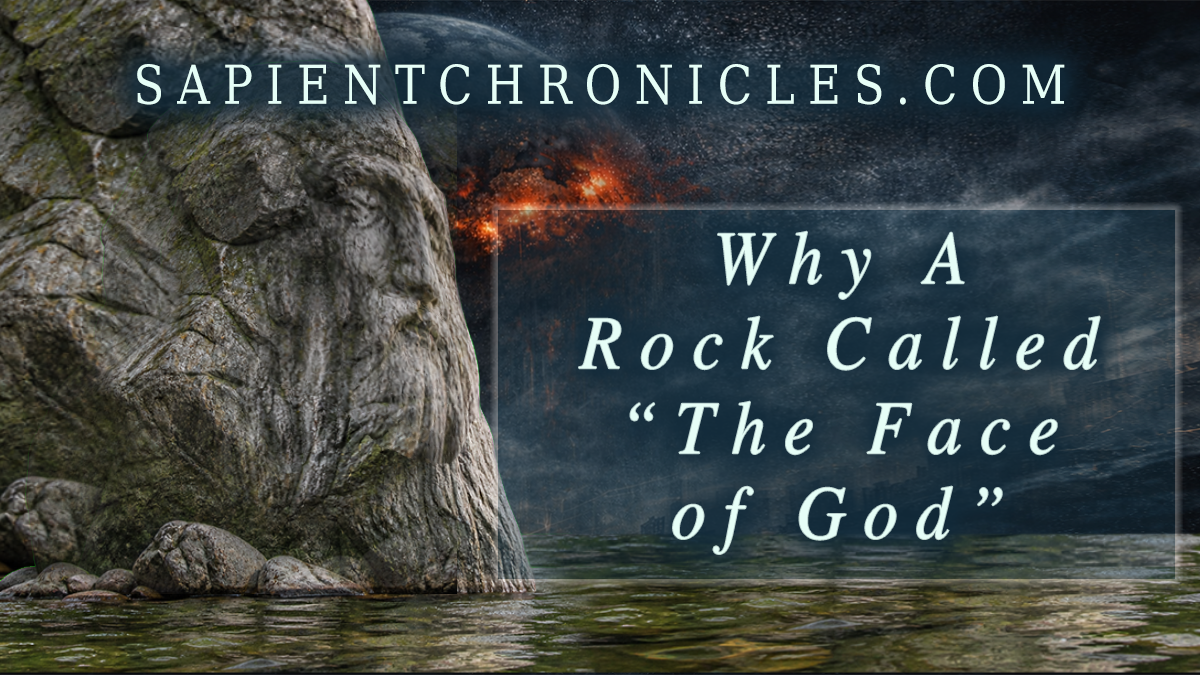
In A.I. World: The Sapient Chronicles, the very first scene finds Jude Salazar standing at the edge of the Conejos River at dawn, looking across the water at a boulder sitting at the foot of a peak the locals call Monkey Face. The rock is large, roughly six meters wide and ten meters tall. It looks, as I wrote it, placed rather than fallen. And to Jude, it looks like a face. A weathered one, with a long beard carved by water and frost.
He calls it the Face of God.
I put that in the book because it is real. Or at least, the version that shaped me is.
The Cabin, the Rock, and What It Did to Me
There is a real place in southern Colorado along the Conejos River. There is a real peak the locals have always called Monkey Face, and the name fits perfectly when you look at it. The peak is shaped exactly like a monkey’s head in profile. The jutting jaw, the upturned nose, the prominent brow. The whole silhouette. You see it once and you cannot unsee it.
But that is not the rock I am writing about.
At the base of that peak, sitting near the river, there is a boulder. It is not famous. It does not appear on any map. The only people who have ever really seen it are the ones who have spent time in or around a particular cabin on that stretch of the Conejos, close enough to the water to notice it. Most people passing through would never give it a second look.
I gave it more than a second look. I gave it years.
I spent significant stretches of time in that cabin, and the view from there faced that boulder directly. Day after day, that rock was the first thing I saw in the morning. What I saw in it was completely different from anything on the peak behind it. Not a monkey. Not something wild or unsettling. Something old and still. A massive, dignified face with a long beard, shaped by water and time and what I can only describe as intention. A face that looked like it had been watching that valley long before any of us arrived and would still be watching long after we were gone.
I am a Christian. I believe God is present. I believe He speaks through the created world, through beauty and stone and silence, if you are paying attention. That rock became, for me, a daily reminder that I was not alone. Not threatening. Not demanding. Just present.
It steadied me more times than I can count.
Why It Belongs in the Story
When I started writing Jude Salazar, I knew he needed to be a man of faith in a world that had largely moved past it. A world governed by synthetic intelligences, held together by treaty and exhaustion, where the sacred had been crowded out by the urgent.
I needed to show what faith looks like in a man who is not performing it. Not preaching it. Not defending it. Just living it quietly, before the day starts, before anyone is watching.
The Face of God gave me that. Jude prays the way, as I wrote it, a man prays after life has taught him that performance is wasted motion. No theatrics. No bargaining. He looks at the rock, and he says out loud, to the boulder and the God behind the boulder, two sentences: “Alright. I’m here. Help me be worth something today.”
That is it. That is his whole prayer. And I think it is one of the most honest things in the book.
The Detail That Matters to LIRA
What makes the scene interesting is that the story’s AI narrator, LIRA, is watching all of this. She can track his physiology through his implant. She can see the tremor in his fingers, the settling of his nervous system, the shift in his posture after the prayer. She can measure the sadness he acknowledges and then sets aside.
But she cannot read the prayer. The Freehold does not permit constant transcription of private prayer, and Jude’s implant honors the boundaries he demanded when he was old enough to understand what an open channel truly costs.
LIRA says it plainly in the text: she could not read the prayer out of his mind.
That boundary matters to me as a writer. Because real faith is not performed for observers. It is not a data point. It happens in the space between a person and God, and that space belongs to them alone.
What a Rock Taught Me About Writing
I think the best details in fiction are the ones the writer actually lived. Not researched. Not imagined. Lived.
The Conejos River is real. The cabin is real. The boulder is real. The feeling of standing in the cold at dawn, looking at something ancient and feeling, somehow, accompanied, that is real too.
Almost nobody knows that boulder exists. It belongs to the few people who have stood in the right place on that particular bend of the river and looked up at the right moment. I gave it to Jude because it felt like something worth sharing, even if only in fiction.
If you read this novel and that opening scene lands for you the way I hoped it would, now you know where it came from.
The best is yet to come!
Alan D.

Leave a Reply